Automated inventory
Vortex
A custom internal consignment system for reselling limited-edition sneakers, apparel and collectibles. It fully automates the entire product lifecycle, from the consignor's upload through the Shopify listing to logistics and payouts.
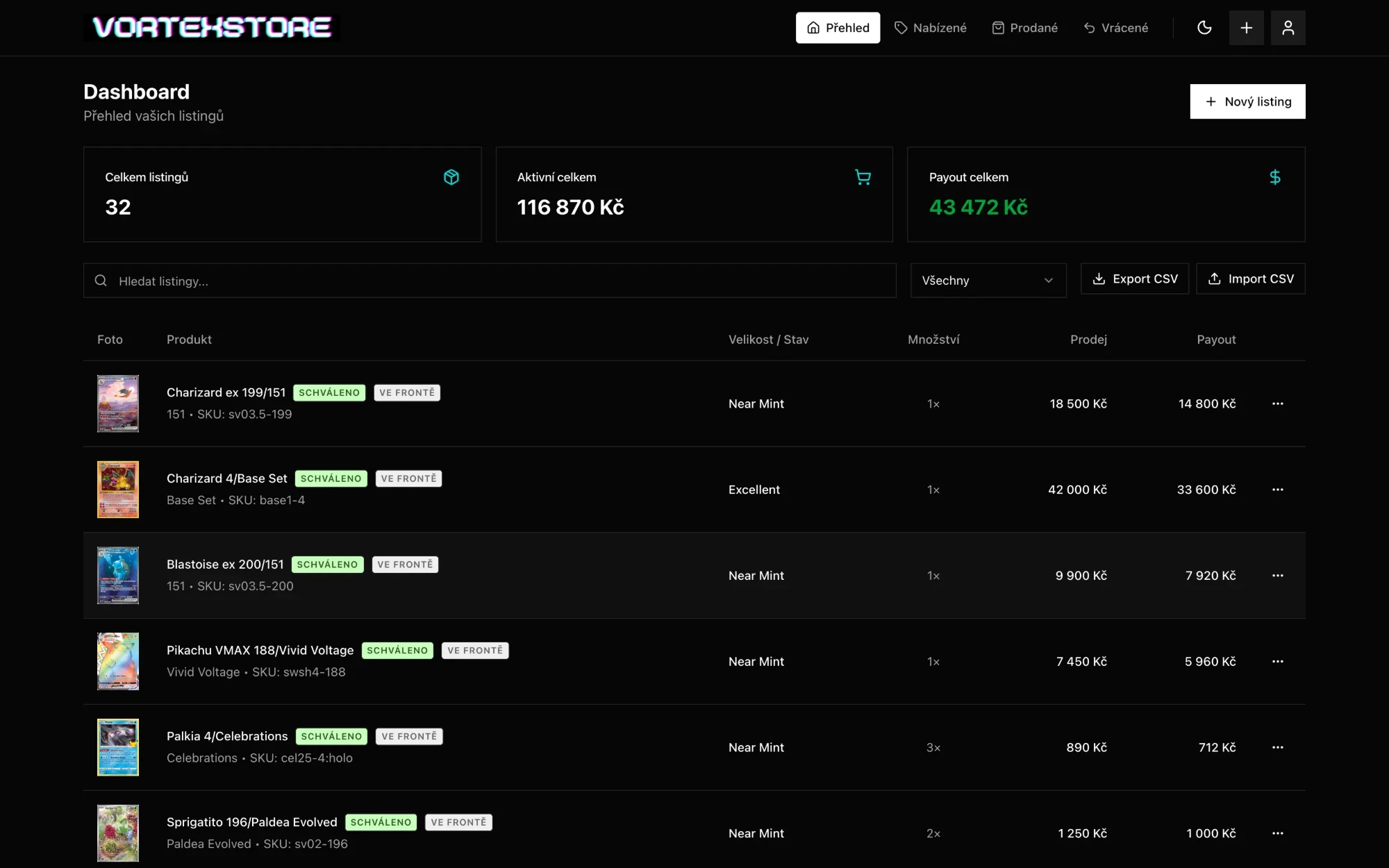


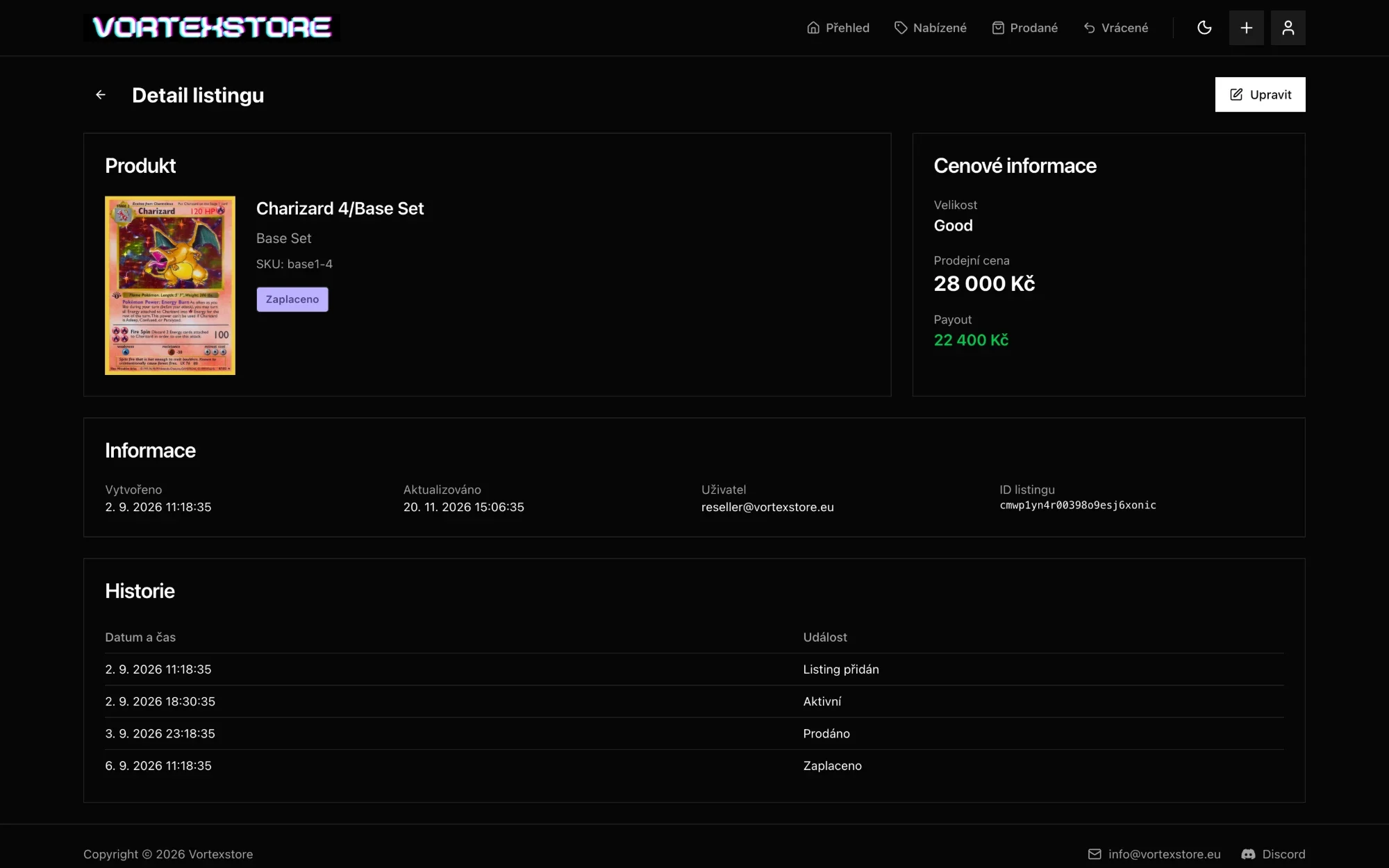
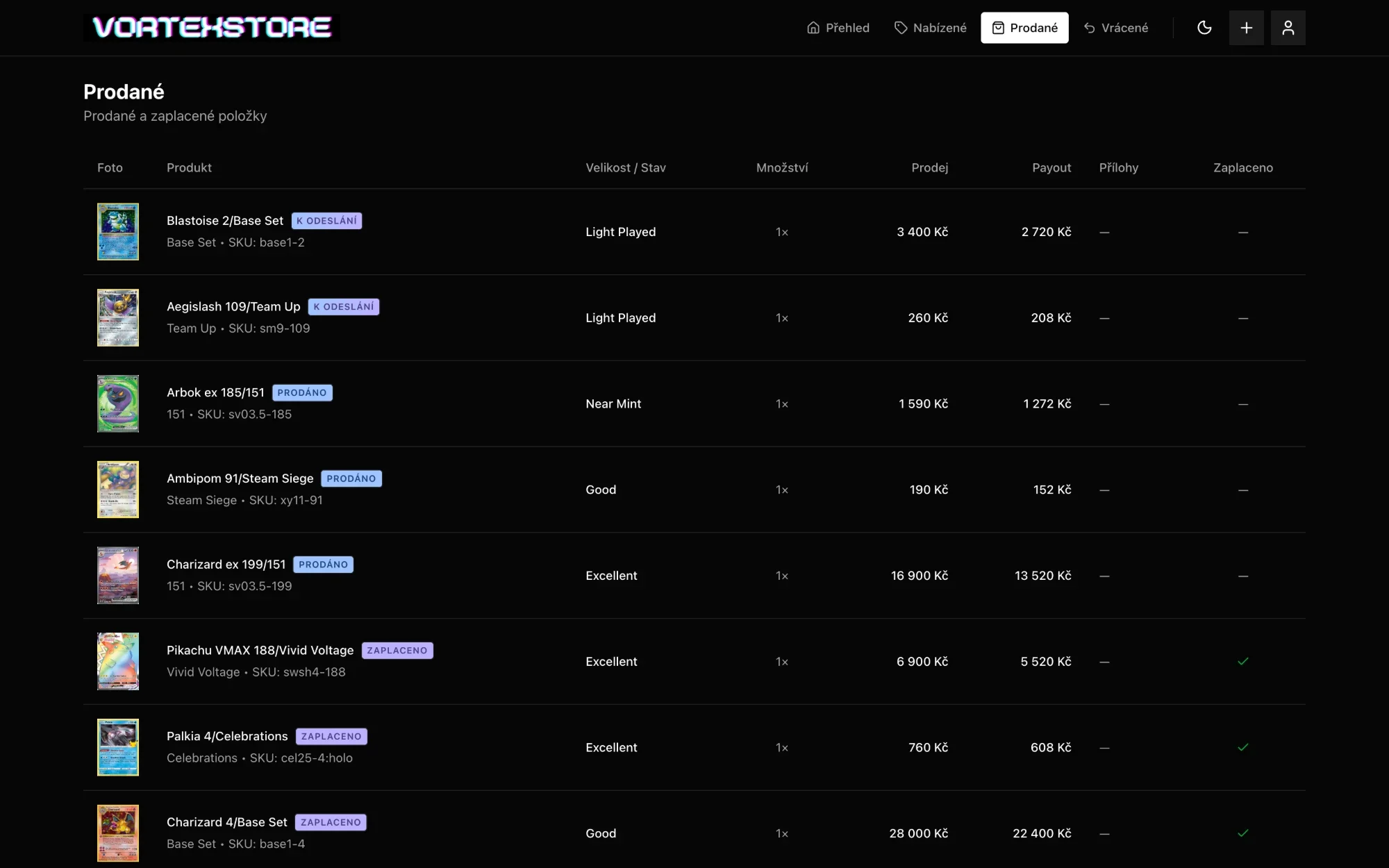

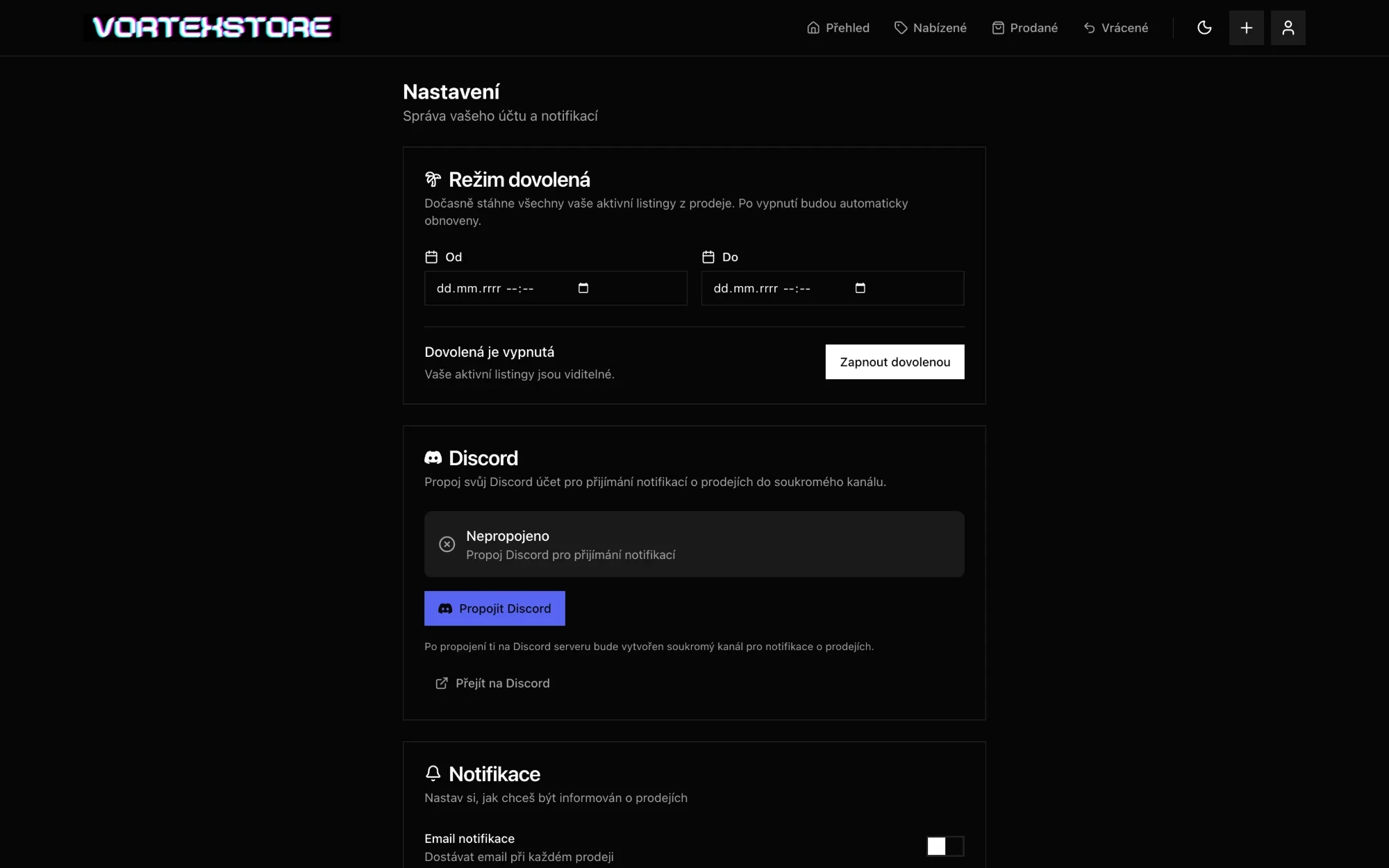
01The brief
Running an e-shop built on consignment sales took dozens of hours of manual work every week. The owner had to painstakingly chase product details from consignors, copy them between Word, Excel and notes, edit photos by hand in a graphics editor and create every single item in Shopify manually. On top of that came sending shipping labels by hand, checking deliveries with carriers every day and copying orders into spreadsheets. The goal was to replace this chaos with a single, clear system that automates the day-to-day routine.
02The solution
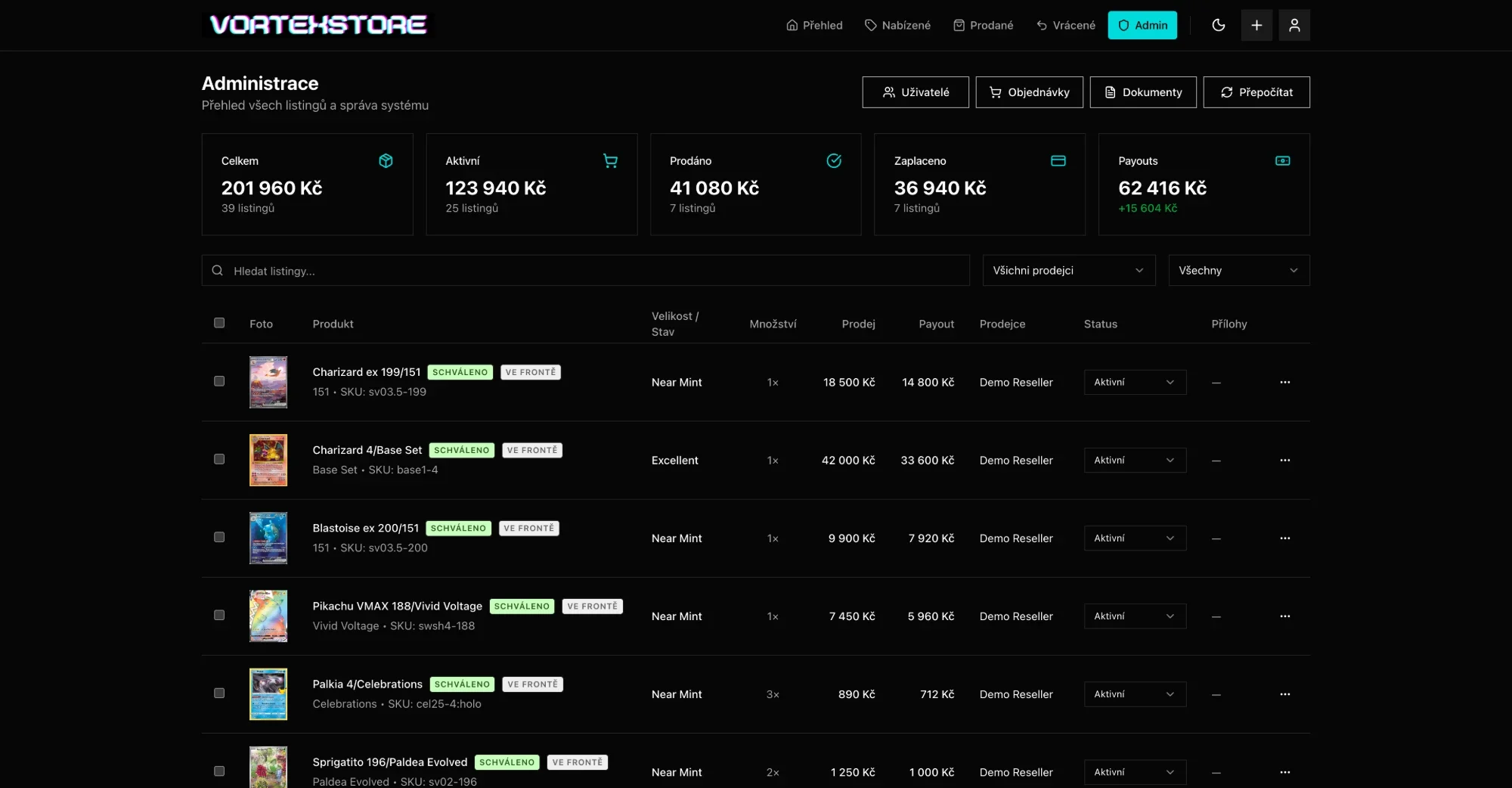
I designed and built the system from scratch as an integrated web app connected to Shopify, shipping carriers and communication channels. It consists of two main views:
Consignor portal
Every seller has their own account where they manage their products themselves:
- they submit new listings with exact details, sizes and payout price,
- they track the status of their items in real time (pending review, for sale, sold, ready to ship, paid out),
- they get automatic email and Discord notifications on every order status change, with the shipping label attached,
- they can turn on Vacation mode, which temporarily pulls all their active listings from the e-shop in one click, so they avoid late-shipping penalties while away.
Admin panel for the e-shop owner
A central control panel that replaced the messy spreadsheets:
- one-click approval of new listings, with data pushed to Shopify automatically (including SKUs, size variants and VAT settings),
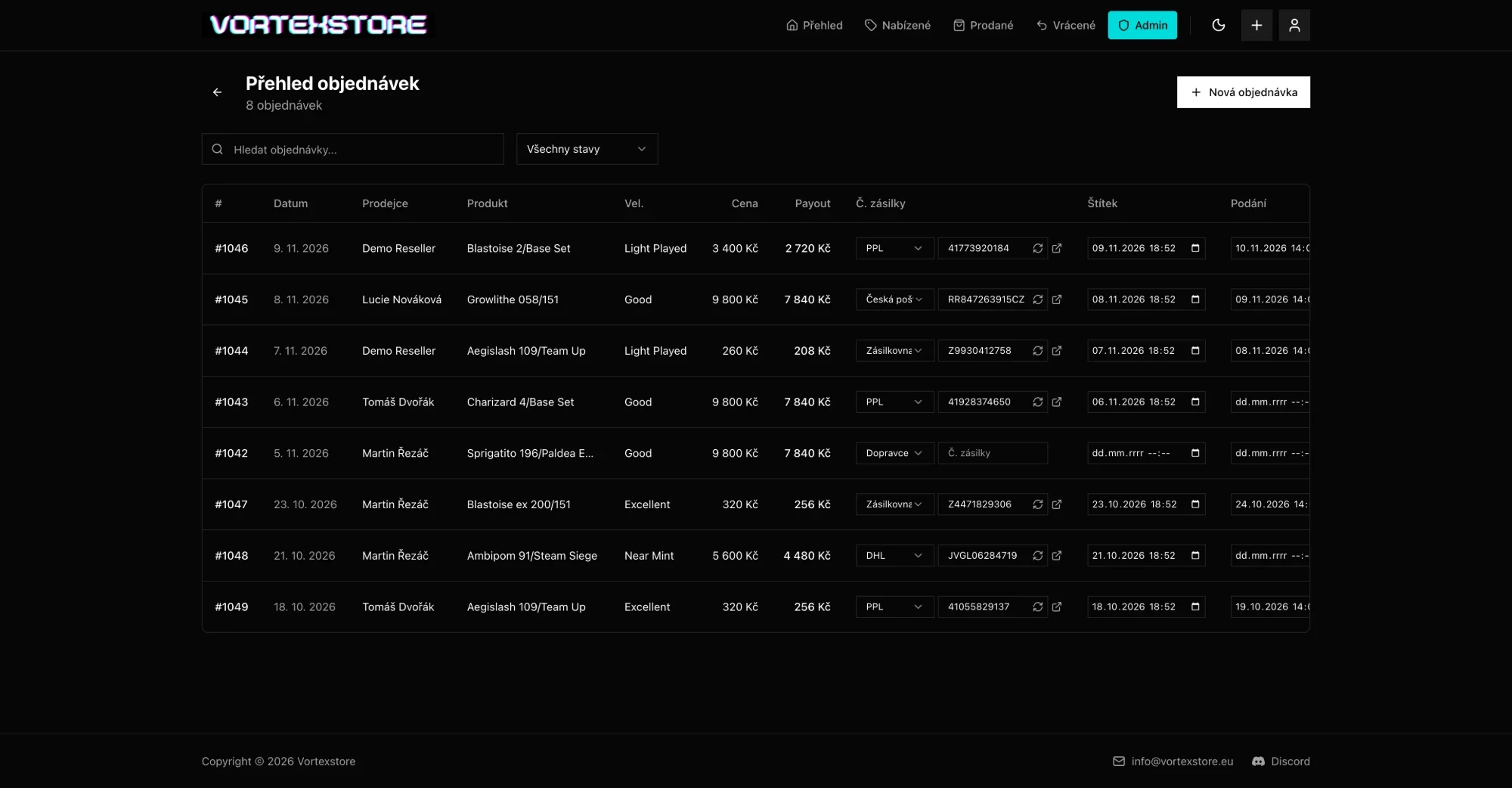
- a unified overview of all orders, commissions (payouts), documents and invoices, with filtering and export,
- automatic matching and tracking of shipments across carriers (Zásilkovna, PPL, Česká pošta, DHL), with the system updating the order status on its own once the customer picks up the package.
03How I worked with AI
Vibecoding isn't about writing one prompt and hoping for the best. It's a managed process built on solid architecture, incremental development and continuous testing.
The entire system, from the first draft to live production on the server, was built together with a team of specialized AI agents. I defined the complete architecture, data structure, commission calculation logic and security rules. Under my technical supervision, the AI agents wrote the code, built the integrations and tested individual modules, while I continuously reviewed their output, fine-tuned the interface and manually verified the critical parts of the process.
04What I built
- System architecture, database and user interface design (UI/UX)
- Full frontend and backend development (TypeScript, Next.js, React, Tailwind CSS, PostgreSQL, Prisma)
- Two-way sync with the Shopify API and webhooks
- A custom module for automatically downloading and editing product photos
- Integration with carrier APIs (Zásilkovna, PPL, Česká pošta)
- Automated notifications via the Resend API and a custom Discord bot
- Deployment to a dedicated VPS in Docker (Caddy) and automated backups
05Challenges and solutions
Automating photo editing to fit a legacy theme
The e-shop ran on an older theme that required specific thumbnail dimensions. Previously, every photo had to be downloaded from the StockX database by hand, cropped in Canva and positioned on a white background. I built a custom plugin that downloads the photo via API, removes the background, places it on a white canvas and positions it pixel-perfectly for a consistent format.
Two-way sync between the system, Shopify and Discord
So the owner wouldn't have to copy data between systems, I connected the app to Shopify via API and webhooks. As soon as a product sells on the e-shop, the system automatically marks it as sold, generates the paperwork and instantly sends the consignor a message with instructions and a shipping label via the Resend API and a custom Discord bot.
Automatic delivery tracking and penalty prevention
Manually checking dozens of shipments a day was unsustainable. I connected the system directly to the carriers' APIs, so when a package status changes to “delivered”, it shows up in the admin panel instantly and releases the order for payout. To protect both the sellers and the e-shop's reputation, I also added Vacation mode, which temporarily hides listings from consignors who are unavailable.
Data security and regular backups
The original process ran on local files with no backups at all, which meant a critical risk of data loss if the computer failed. The whole system now runs in an isolated environment on a dedicated VPS, with regular automated database backups via CRON and additional backups of the e-shop's source data.
06What this approach brings
Team-level output for a fraction of the time and budget
Instead of an expensive team of developers, testers and DevOps specialists, one architect backed by AI agents was enough. There are no delays from communication, approvals or coordination between roles. The product was built for a fraction of the usual cost and at a pace that makes it possible to respond to feedback right away and ship new features within hours.
A working MVP before you bring in your in-house team
Have an idea for a digital product but don't want to commit expensive developer resources right away? I'll build a working version so you can validate the concept with real users. Meanwhile, your team can stay fully focused on current projects. Once the product proves itself on the market, they can take over the finished foundation or build on it to their own standards, knowing they're building something people actually want.
07Where vibecoding hits its limits
- AI makes different mistakes than humans and needs human oversight: AI can make mistakes a human would never think of, and it often wraps them in code that looks perfectly correct at first glance. Automated tests aren't enough. I have to personally go through every key step, test it in real-world use and make sure it makes sense from the user's perspective too. Without a final human review, these blind spots would make it all the way to customers.
- Without technical fundamentals, you pile up tech debt: AI writes a working piece of code on demand, but it doesn't see the bigger picture. Even though I'm not a traditional backend developer, my experience with coding and building websites gives me crucial insight into how things work under the hood. That lets me keep the project structure in check, understand how the data fits together and spot early when the AI is heading down a dead end. Without these technical fundamentals, a fast start would turn into unmanageable chaos within a few months.
- Responsibility and final decisions always rest with a human: AI bears no legal or business responsibility. Server security, GDPR-compliant data protection and reliable payments require someone who knows the right questions to ask, has the risks reviewed and makes sure nothing is left to chance. Technology delivers speed, but guaranteeing quality and security is work I have to do and stand behind myself.